
Concrete Removal Service — Toronto / GTA / Thornhill
What a concrete removal service actually involves
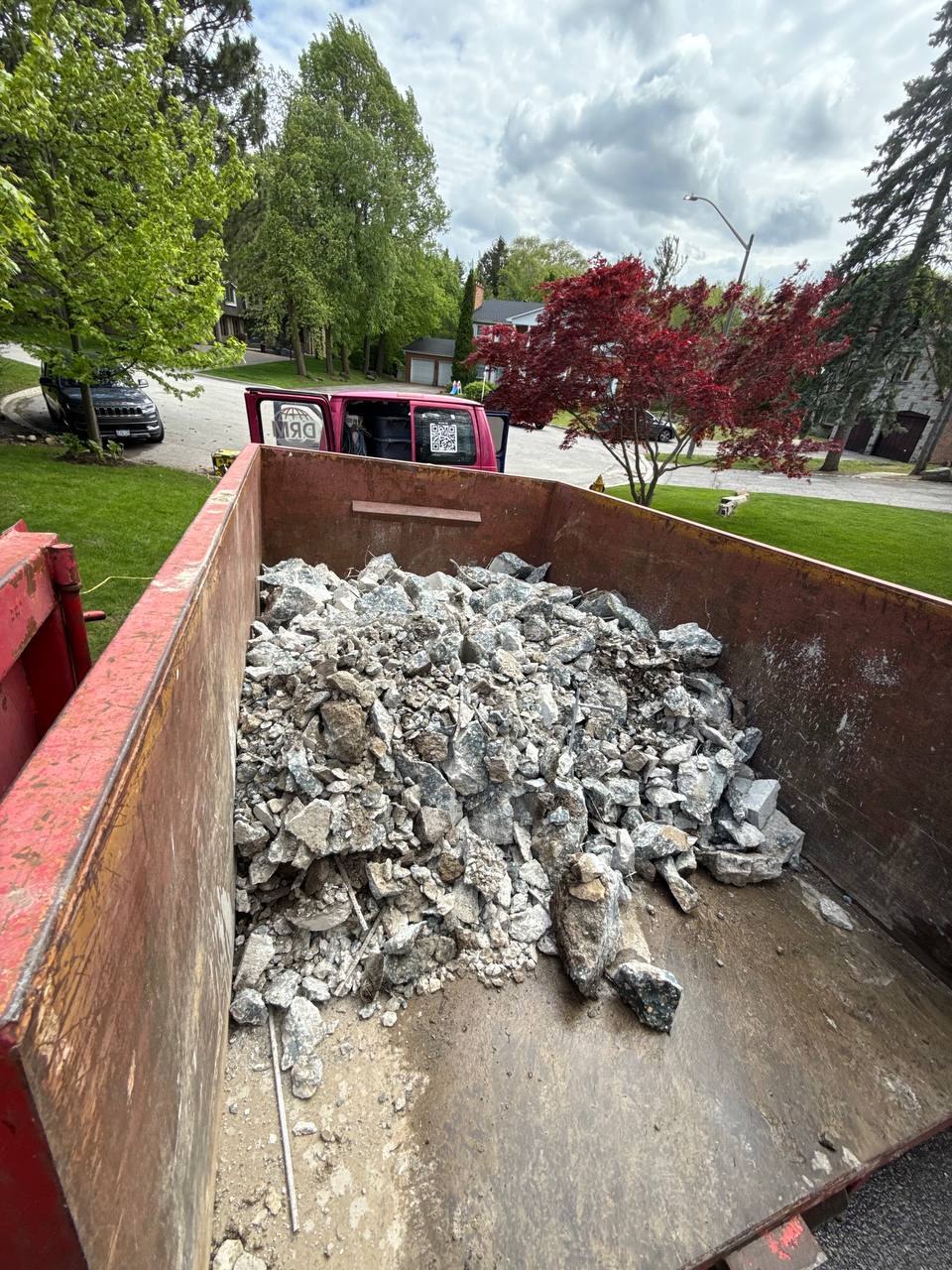
Concrete removal is not just breaking and hauling concrete debris. In most projects, concrete is a structural or load-bearing element tied to reinforcement, foundations, slabs, utilities, and adjacent structures.
A professional concrete removal service requires controlled demolition, proper separation, and an understanding of how concrete interacts with the rest of the building or site.
Where concrete removal is typically required
Concrete removal is commonly required in the following situations:
- Removal of slabs, pads, and reinforced concrete structures
- Site preparation for renovation or redevelopment
- Replacement of damaged or failed concrete elements
- Utility work requiring concrete access or trenching
- Structural modifications involving concrete components
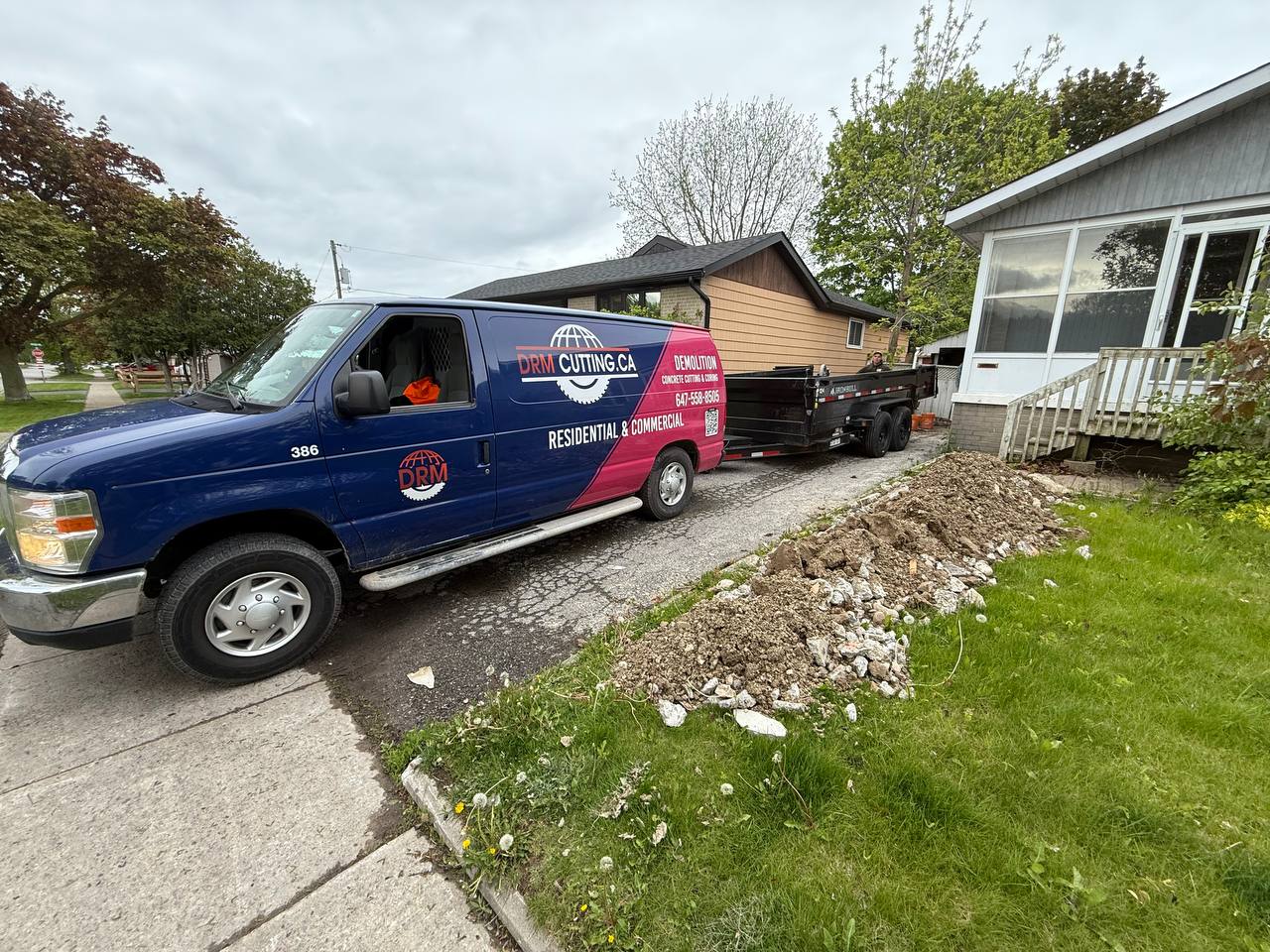
In Toronto and the GTA, concrete removal often exposes hidden conditions such as embedded utilities, reinforcement congestion, or structural connections that must be handled carefully.
Main risks of improper concrete removal

When concrete removal is performed without planning or engineering awareness, typical problems include:
- Damage to adjacent slabs, foundations, or walls
- Striking embedded utilities or reinforcement
- Excessive vibration affecting nearby structures
- Uncontrolled cracking beyond the removal area
- Cost overruns due to emergency repairs
Most failures happen when concrete is treated as debris rather than as part of a structural system.
DRM Team engineering approach
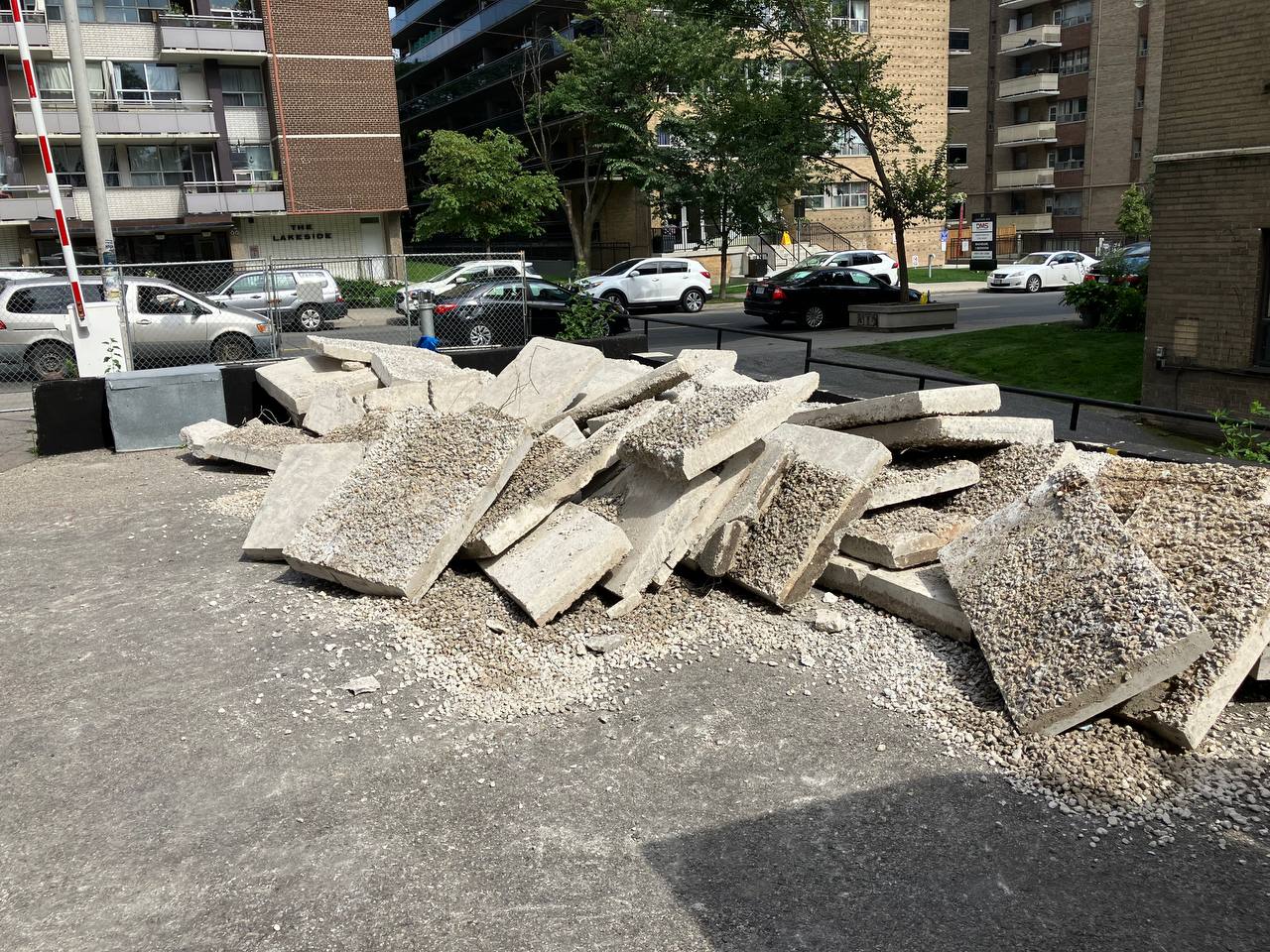
We approach concrete removal as an integrated demolition and cutting task:
- Evaluation of concrete type, thickness, and reinforcement
- Identification of structural connections and embedded elements
- Planning the removal sequence to control impact and vibration
- Concrete cutting where precise separation is required
- Controlled demolition and removal of concrete and steel
- Preparing the area for the next construction or repair phase
Concrete scanning and cutting are used when required to reduce risk and prevent accidental damage.
Types of concrete removal projects we handle
- Reinforced concrete slabs and pads
- Concrete structures tied to foundations or walls
- Interior concrete removal inside active buildings
- Projects requiring clean edges for reconstruction
- Sites with follow-up construction or structural work
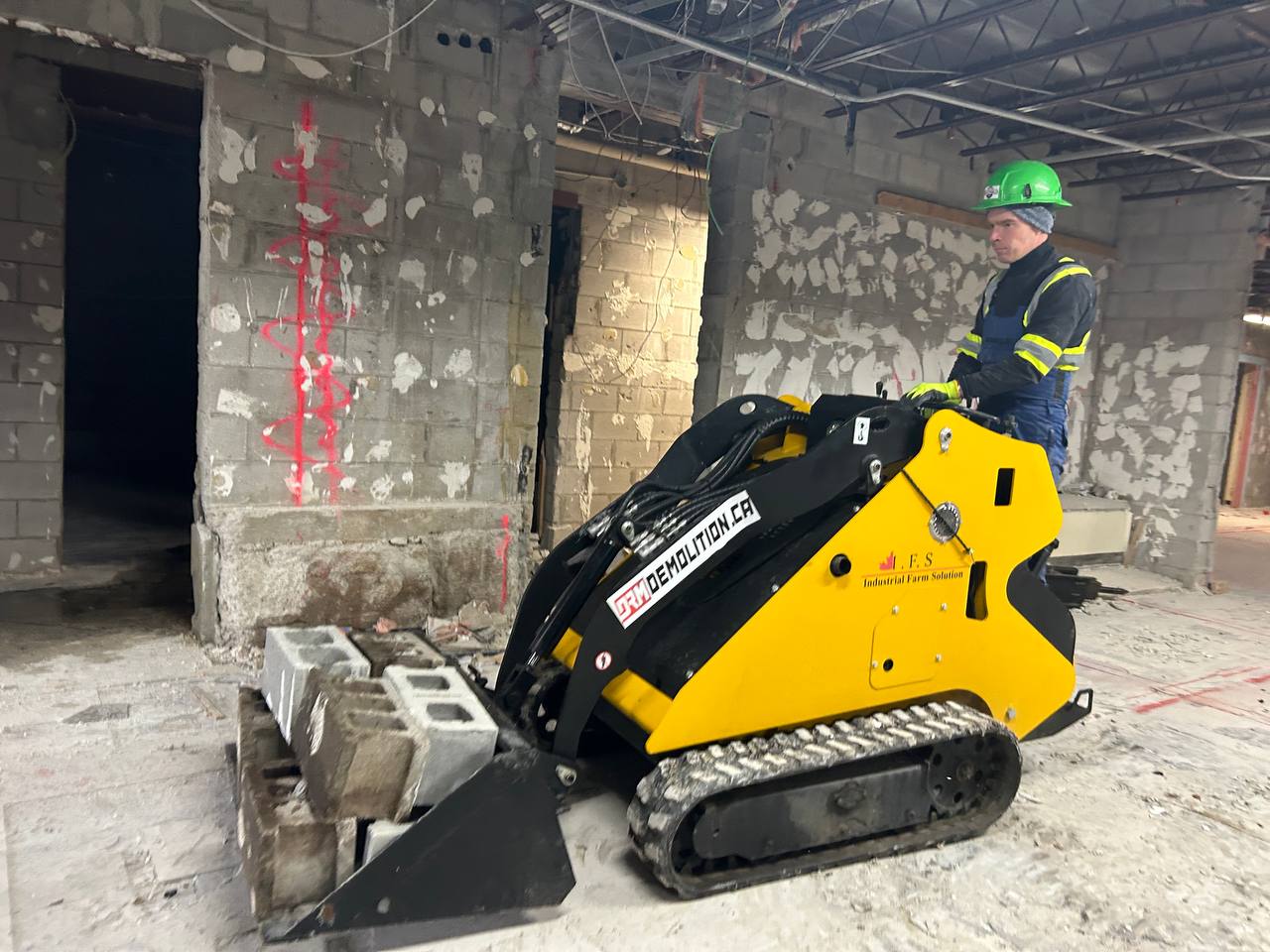
We do not perform uncontrolled or “hammer-first” concrete removal where structural risks are ignored.
Clear limitations and realities
- There will be noise, dust, and vibration
- Concrete removal often reveals additional scope
- Some projects require staged work and inspections
- Low-cost demolition frequently leads to higher total costs
These realities are addressed upfront to avoid surprises during the project.